冷凝法油气回收技术研究现状
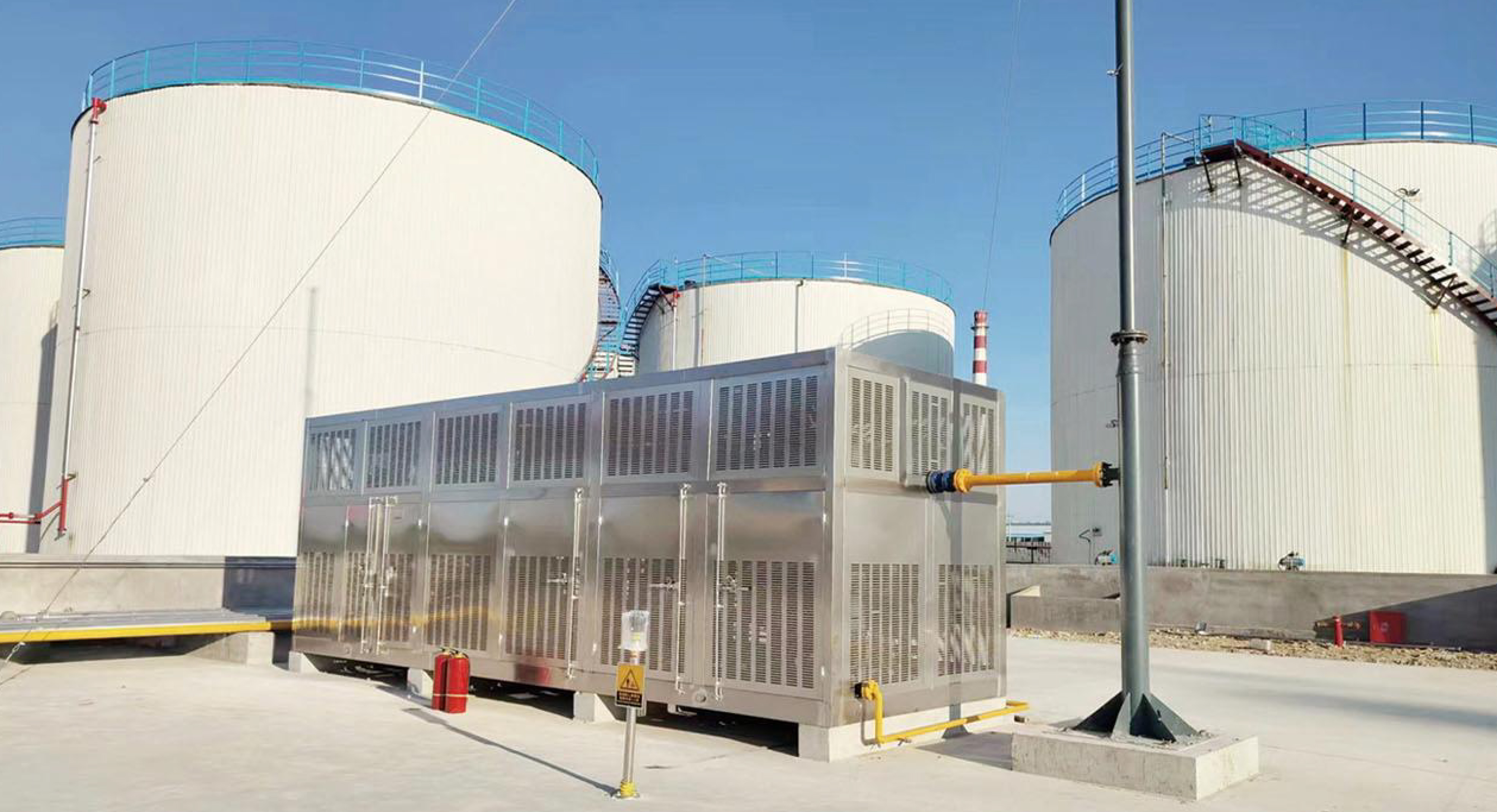
石油等油品在炼制、储运、销售等过程中会挥发出部分轻烃组分进入大气,造成资源浪费和环境危害。冷凝法油气回收技术利用机械制冷方法制取低温来冷凝油气中的轻烃组分实现油气回收。该技术节能环保、关键技术成熟、系统运行稳定、安全性好,应用前景广阔。
Petroleum and other oil products will release some light hydrocarbon components into the atmosphere during refining, storage, transportation, and sales, causing resource waste and environmental hazards. The condensation method for oil and gas recovery technology utilizes mechanical refrigeration to produce low temperatures for condensing light hydrocarbon components in oil and gas to achieve oil and gas recovery. This technology is energy-saving and environmentally friendly, with mature key technologies, stable system operation, good safety, and broad application prospects.
1 冷凝法油气回收技术的应用
Application of Condensation based Oil and Gas Recovery Technology
20世纪40年代开始,美国、前苏联等石油公司、环保部门及研究机构已经深入研究了损耗机理,并采取措施降低油品的蒸发损耗。20世纪60年代,以美国为代表的发达国家开始了对油气回收技术的研究,市场上出现了专用的油气回收处理 装置。1970-1976 年间,冷凝法技术回收油气得到了较好的发展,美国安装了超过150套的冷凝回收 系统,回收效率达到了90%.之后, EdwardsR C.等人进一步研究冷凝法油气回收系统,并逐步完善 冷凝法油气回收的理论。1997 年,美国爱德华兹 公司就在世界各大石油公司安装了400 多台“冷凝法"油气回收设备。20世纪90年代,计算机模拟软件迅速发展,加拿大HYPROTECH公司研发的HYSYS模拟软件,可以比较准确的模拟系统同流程,计算油气等混合物的物性,通过动态模拟,比较不同油气组分的回收效果并做分析研究,为实际应用提供理论.上的指导。当前,欧盟等很多国家也已普遍对油气回收技术进行了研究与探讨。
Since the 1940s, oil companies, environmental departments, and research institutions in the United States, former Soviet Union, and other countries have conducted in-depth research on the mechanism of oil loss and taken measures to reduce the evaporation loss of oil products. In the 1960s, developed countries represented by the United States began research on oil and gas recovery technology, and specialized oil and gas recovery and treatment devices appeared on the market. Between 1970 and 1976, condensation technology for oil and gas recovery made significant progress, with over 150 condensation recovery systems installed in the United States, achieving a recovery efficiency of 90% Afterwards, EdwardsR C. and others further studied the condensation based oil and gas recovery system and gradually improved the theory of condensation based oil and gas recovery. In 1997, Edwards Corporation in the United States installed more than 400 "condensation method" oil and gas recovery equipment in major oil companies around the world. In the 1990s, computer simulation software developed rapidly, and HYSYS simulation software developed by Canada's HYPROTECH company can accurately simulate the system and process, calculate the physical properties of oil and gas mixtures, compare the recovery effects of different oil and gas components through dynamic simulation, and conduct analysis and research, providing theory for practical applications Guidance from above. Currently, many countries such as the European Union have also conducted research and exploration on oil and gas recovery technology.
2 冷凝法油气回收技术原理
Principle of Condensation based Oil and Gas Recovery Technology
冷凝法油气回收技术就是利用不同温度下烃类物质蒸汽压的差异,通过采用机械制冷循环技术制取低温,置换出油气的汽化潜热,使油气中的一-些烃类蒸汽压达到过饱和状态,从而冷凝为液态,以实现油气的回收和利用。-般油气冷凝回收流程分为预冷、中冷、深冷三个冷却步骤。
The condensation method for oil and gas recovery technology utilizes the difference in vapor pressure of hydrocarbon substances at different temperatures, and uses mechanical refrigeration cycle technology to produce low temperatures, replace the latent heat of vaporization of oil and gas, and make some hydrocarbon vapor pressure in oil and gas reach supersaturation state, thereby condensing into liquid state to achieve oil and gas recovery and utilization. -The general oil and gas condensation recovery process is divided into three cooling steps: pre cooling, intermediate cooling, and deep cooling.
预冷级设置的主要目的是为了使油气预冷, 进入预冷器内的油气会从环境温度下降至4℃ 左右,这样既可以使气体中的高碳烃组分冷凝下来,防止其进入中置冷凝器内继续换热,增加能耗,又能使油气预冷,减少中置冷凝器和末置冷凝器的冷负荷。预冷同时能将油气中的-部分水蒸气冷凝下来,防止中置冷凝器结霜,阻塞管路。
The main purpose of setting the pre cooling stage is to pre cool the oil and gas. The oil and gas entering the pre cooler will drop from the ambient temperature to around 4 ℃. This can not only condense the high carbon hydrocarbon components in the gas, prevent them from entering the mid condenser for further heat exchange, increase energy consumption, but also pre cool the oil and gas, reducing the cooling load of the mid condenser and the final condenser. Pre cooling can also condense some of the water vapor in the oil and gas, preventing frost formation in the central condenser and blocking the pipeline.
中冷级设置的主要目的就是为了降低油气的温度,将大部分可回收轻烃组分及水蒸气冷凝下来,中冷级温度设置的越低,就越能减少深冷级的能耗,考虑到制冷系统的能耗问题,中冷级的温度也不可以太低,根据已有研究,中冷级温度可设置 在-30 ~ -70℃之间。中冷级是设置一个冷却分离器还是两个冷却分离器,需要进一-步分析研究。深冷级设置的主要目的是能将油气中小分子轻烃组分冷凝下来,使油气的回收效率及尾气排放浓度达到国家标准,已有研究表明,为达到国家排放标准,油气中的非甲烷总烃的冷凝温度需达到 -100 ~ -120℃, 有学者认为,应在机械制冷后增 加液氮制冷级,使油气达到更低的温度-160 ~-180℃,但就目前研究来看,无需液氨制冷级,-110℃的低温便可以使油气回收效果满足国家标准。
The main purpose of setting the intermediate cooling stage is to reduce the temperature of oil and gas, condense most of the recoverable light hydrocarbon components and water vapor. The lower the intermediate cooling stage temperature is set, the more it can reduce the energy consumption of the cryogenic stage. Considering the energy consumption of the refrigeration system, the temperature of the intermediate cooling stage cannot be too low. According to existing research, the intermediate cooling stage temperature can be set between -30~-70 ℃. Further analysis and research are needed to determine whether to install one or two cooling separators in the intermediate cooling stage. The main purpose of setting the cryogenic stage is to condense small molecule light hydrocarbon components in oil and gas, so that the recovery efficiency and exhaust emission concentration of oil and gas can meet national standards. Previous studies have shown that in order to meet national emission standards, the condensation temperature of non methane total hydrocarbons in oil and gas needs to reach -100~-120 ℃. Some scholars believe that a liquid nitrogen refrigeration stage should be added after mechanical refrigeration to lower the temperature of oil and gas to -160~-180 ℃. However, according to current research, there is no need for a liquid ammonia refrigeration stage, and a low temperature of -110 ℃ can make the oil and gas recovery effect meet national standards.
3 冷凝法油气回收技术与其它回收技术比较
Comparison of Condensation based Oil and Gas Recovery Technology with Other Recovery Technologies
3.1与吸收法油气回收技术比较
3.1 Comparison with absorption based oil and gas recovery technology
吸收法是利用具有挥发性的轻烃组分易溶于有机溶剂的原理,实现油气与空气的分离。该技术难点在于吸收剂的选择上,由于吸收剂吸收油气后不可再循环利用,使用范围有限,一般只能适用于炼油厂中的油气回收。
The absorption method utilizes the principle that volatile light hydrocarbon components are easily soluble in organic solvents to achieve the separation of oil and gas from air. The technical difficulty lies in the selection of absorbents. As absorbents cannot be recycled after absorbing oil and gas, their scope of use is limited and they are generally only suitable for oil and gas recovery in refineries.
3.2与吸附法油气回收技术比较
3.2 Comparison with adsorption based oil and gas recovery technology
吸附法是利用硅胶、活性炭、活性纤维等吸附剂对油气中各组分吸附力的不同来实现混合油气的分离。目前,各种吸附剂都存在-.定的问题,如吸附剂劣化、可燃性、活性炭导热系数低、活性炭纤维价格商、解吸较难、填充体积大、硅胶吸水性强等问题,吸附法技术在国外较为成熟,国内的使用并不广泛。
Adsorption method is the use of adsorbents such as silica gel, activated carbon, and activated fibers to achieve the separation of mixed oil and gas based on the different adsorption forces of each component in oil and gas. At present, various adsorbents exist The fixed issues, such as deterioration of adsorbents, flammability, low thermal conductivity of activated carbon, high cost of activated carbon fibers, difficult desorption, large filling volume, and strong water absorption of silica gel, indicate that adsorption technology is relatively mature abroad but not widely used domestically.
3.3与膜分离法油气回收技术比较
3.3 Comparison with membrane separation method for oil and gas recovery technology
膜分离法是一种基于溶解扩散机理,采用特殊材料和方法制成的分离膜对气体具有渗透性,利用一定压力下混合气体中各组分在膜中具有不同的渗透速率,实现分离的气体分离技术。目前膜分离技术正处于发展上升阶段,且存在二次污染问题,我国应用也不是十分广泛。
Membrane separation method is a gas separation technology based on the dissolution diffusion mechanism, using special materials and methods to make separation membranes that have permeability to gases. It utilizes the different permeation rates of each component in a mixed gas under a certain pressure in the membrane to achieve separation. At present, membrane separation technology is in an upward stage of development, and there is a problem of secondary pollution. Its application in China is not very extensive.
3.4 冷凝法油气回收技术的特点
3.4 Characteristics of Condensation based Oil and Gas Recovery Technology
冷凝法油气回收技术装置采用经典复叠或自复叠制冷工艺,具有维护操作方便,安全性好,流程短,设备少,安全性好等特点,输出的液态油可直接利用。工艺原理简明,无需二次工艺处理,而其它油气回收方法必须采用喷淋等二次工艺来处理富集的油气,造成了循环流量大,能耗高等问题。
The condensation method oil and gas recovery technology device adopts classic cascade or self cascade refrigeration processes, which have the characteristics of easy maintenance and operation, good safety, short process, few equipment, and good safety. The output liquid oil can be directly utilized. The process principle is concise and does not require secondary processing, while other oil and gas recovery methods must use secondary processes such as spraying to process enriched oil and gas, resulting in problems such as large circulation flow and high energy consumption.
本文由 油气回收设备 友情奉献.更多有关的知识请点击 http://www.kosman.com.cn/ 真诚的态度.为您提供为全面的服务.更多有关的知识我们将会陆续向大家奉献.敬请期待.
This article is a friendly contribution from oil and gas recovery equipment For more related knowledge, please click http://www.kosman.com.cn/ Sincere attitude To provide you with comprehensive services We will gradually contribute more relevant knowledge to everyone Stay tuned
地址:山东省菏泽市成武县经济开发区机电产业园钢架结构单层5号
 【微信二维码】
  留言咨询
留言咨询Adopting different technology and process control schemes
 鲁公网安备 337172302372103号