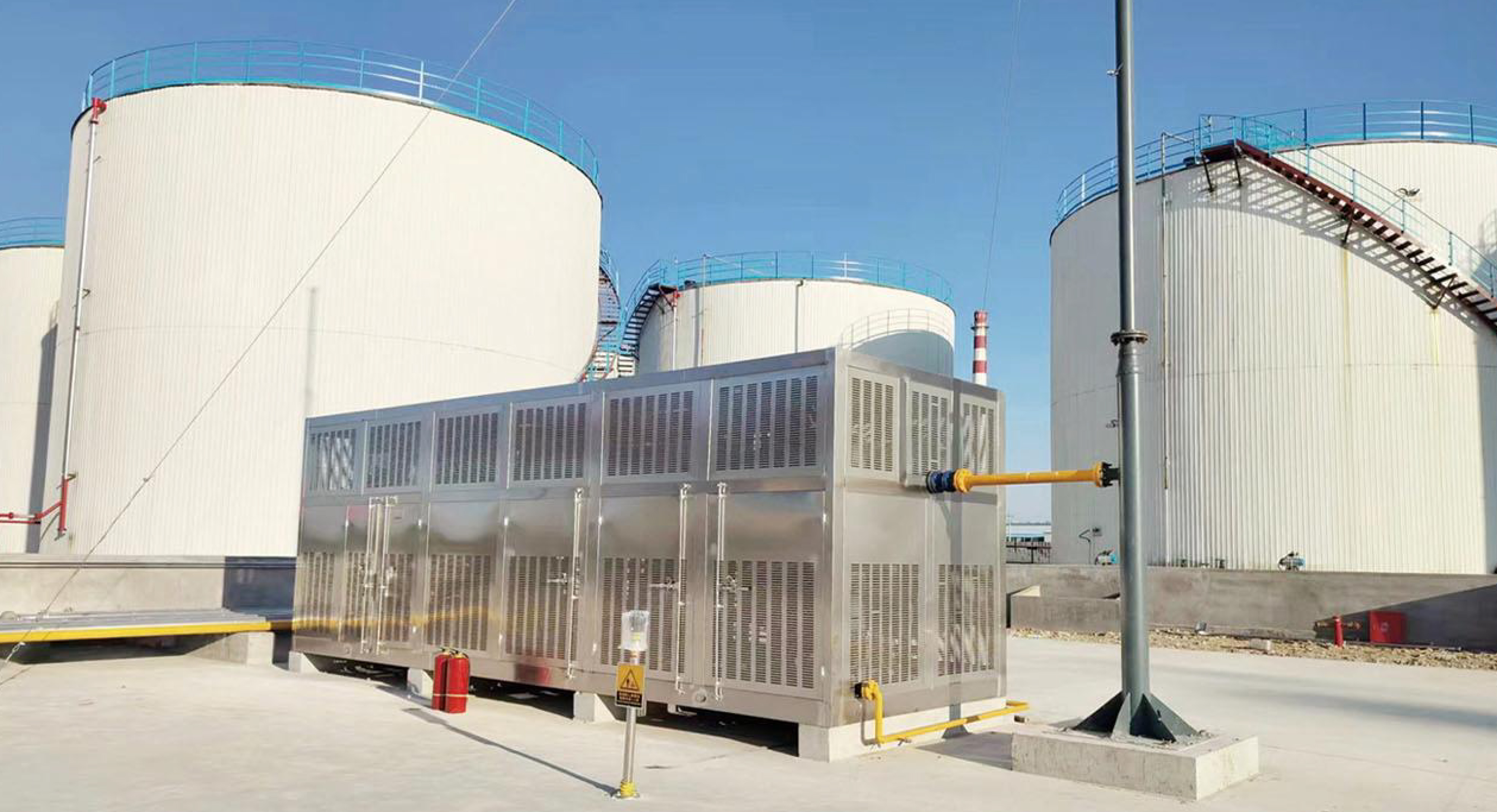
苯类罐区油气回收技术应用性的研究
苯类罐区在日常运行过程中产生大、小呼吸排气,产生大量V0Cs 气体,对人体健康及环境造成较大影响。近年来,国家为了大力推进化工企业VOC、减排工作,相继发布CB31570、GB31571、GB31572等相关环保规范。为了落实国家及地方关于挥发性有机液体储罐污染防治控制要求,采用“冷凝+活性炭吸附+变压解吸”“吸附+浅冷”两种技术对苯类的储罐进行油气回收处理,最终达到环保政策要求,为同行业苯类储罐油气回收治理提供宝贵的经验。
The benzene tank area generates large and small respiratory emissions during daily operation, producing a large amount of V0Cs gas, which has a significant impact on human health and the environment. In recent years, in order to vigorously promote VOC and emission reduction work in chemical enterprises, the country has successively issued relevant environmental regulations such as CB31570, GB31571, GB31572, etc. In order to implement the national and local requirements for pollution prevention and control of volatile organic liquid storage tanks, two technologies, "condensation+activated carbon adsorption+pressure swing desorption" and "adsorption+shallow cooling", were adopted to recover oil and gas from benzene storage tanks, ultimately meeting environmental policy requirements and providing valuable experience for the oil and gas recovery and treatment of benzene storage tanks in the same industry.
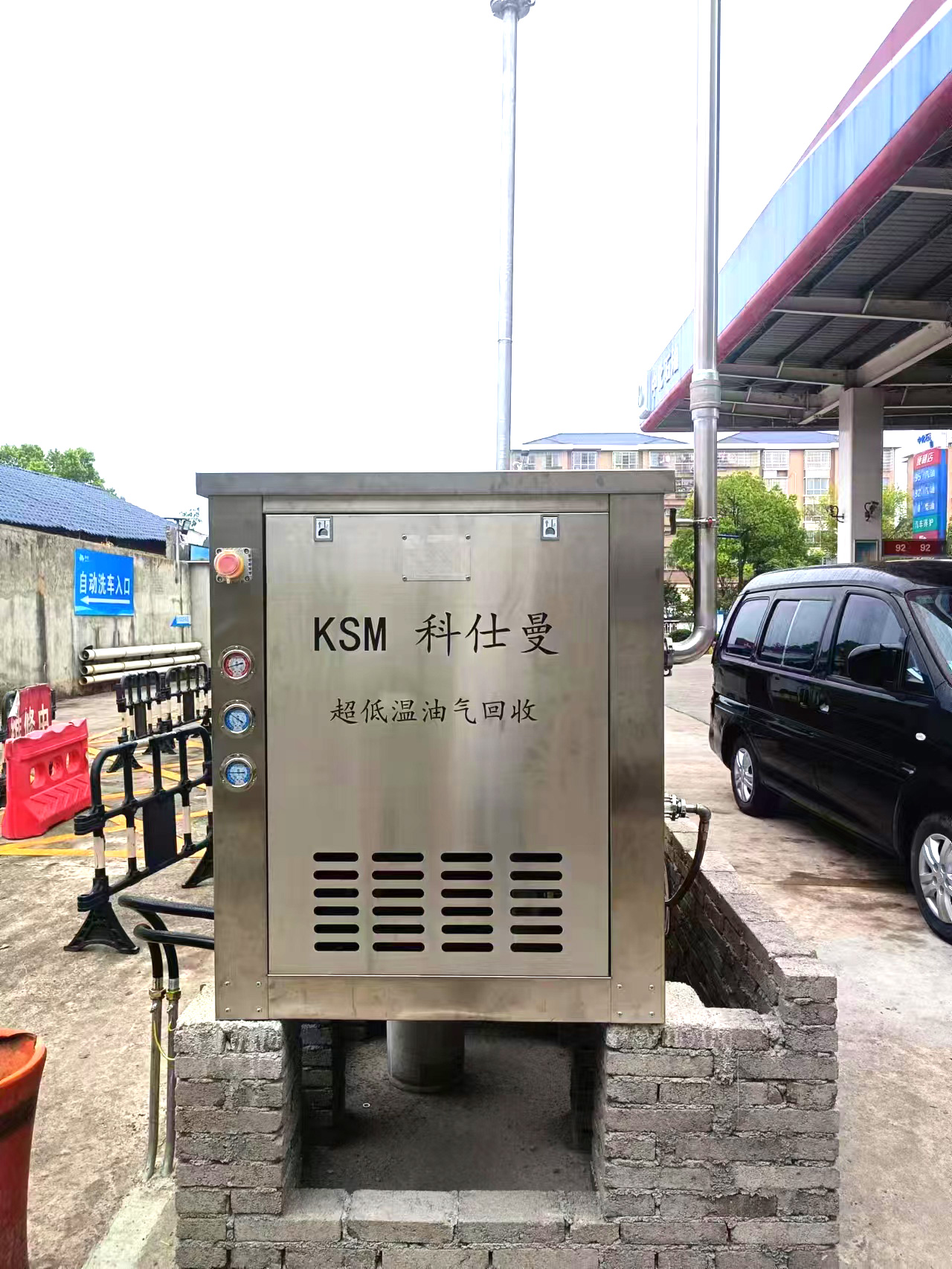
1“冷凝+活性炭吸附+变压解吸”应用
Application of "Condensation+Activated Carbon Adsorption+Pressure Swing Desorption"
“冷凝+活性炭吸附+变压解吸”工艺
The process of "condensation+activated carbon adsorption+pressure swing desorption"
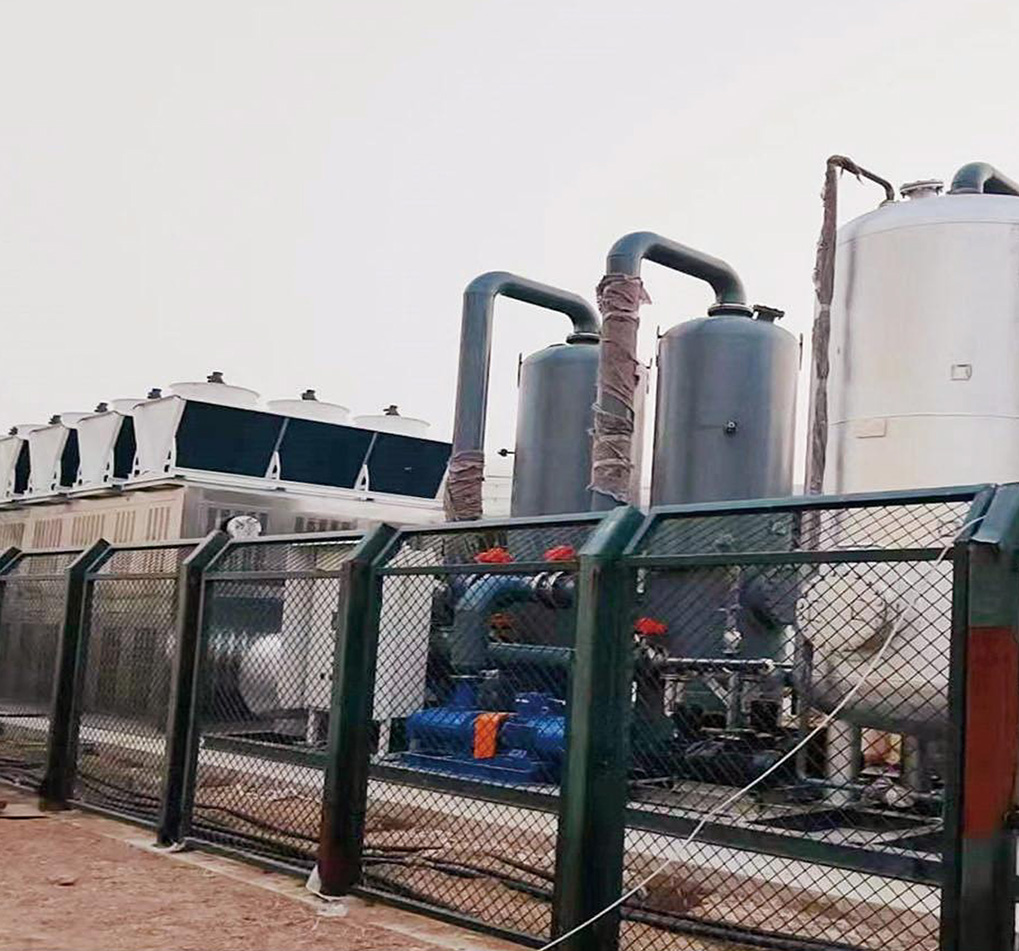
收集的油气首先进入三级冷凝部分,具体过程 如下:预冷在6~8 ℃温度下通过预冷器进行的,当.部分油和水凝结出来时,剩余废气通过第一级换热器冷却至-25℃左右,废气中再次将部分油品凝结出来,然后废气在二级换热器的作用下进--步析出 油品,温度冷却到-70℃左右,然后将废气中90%以上的烃类物质通过三级冷凝分离出来。油气组分直接冷凝液化,冷凝分离后的低温低浓度油气返回原换热器和换热人口回热交换,交换使换热器温度.上升至接近常温,油气回收利用完成。同时,每一级管道都配备了油冷却回收系统,利用制冷系统压缩机送到油气回收装置。
The collected oil and gas first enter the third stage condensation section, and the specific process is as follows: pre cooling is carried out through a pre cooler at a temperature of 6-8 ℃, when When some oil and water condense out, the remaining exhaust gas is cooled to around -25 ℃ through the first stage heat exchanger. Some oil products are condensed out of the exhaust gas again, and then the exhaust gas further precipitates oil products under the action of the second stage heat exchanger. The temperature is cooled to around -70 ℃, and then more than 90% of the hydrocarbon substances in the exhaust gas are separated through the third stage condensation. The oil and gas components are directly condensed and liquefied. After condensation and separation, the low-temperature and low concentration oil and gas are returned to the original heat exchanger and undergo heat exchange with the heat exchanger, which increases the temperature of the heat exchanger Rising to near room temperature, oil and gas recovery and utilization are completed. At the same time, each level of pipeline is equipped with an oil cooling and recovery system, which uses a refrigeration system compressor to deliver to the oil and gas recovery device.
由于低浓度未冷凝机组在常温条件下对油气进行处理,因此这部分油气被带人吸附系统,吸附系统由两个平行的吸附罐(a、b)交替进行,吸附罐对油气通过吸附达到饱和状态,a储罐内的残余油气组分在常压下被吸附,经吸附系统分离的废气通.过阻火器安全地从高空排出。当吸附罐a饱和时,系统自动切入罐b进行吸附处理,同时罐a进行真空解吸再生吸附剂,被吸出来油气被冷凝回到系统中,处理后尾气满足环保指标要求,并通过排气筒高空排出。
Due to the treatment of oil and gas by low concentration uncondensed units at room temperature, this part of the oil and gas is carried into the adsorption system, which consists of two parallel adsorption tanks (a, b) alternately. The adsorption tanks saturate the oil and gas through adsorption, and the residual oil and gas components in tank a are adsorbed at normal pressure. The waste gas separated by the adsorption system is passed through Safely discharge the flame arrester from a high altitude. When adsorption tank A is saturated, the system automatically switches to tank B for adsorption treatment. At the same time, tank A performs vacuum desorption to regenerate the adsorbent, and the extracted oil and gas are condensed back into the system. After treatment, the exhaust gas meets environmental protection requirements and is discharged at high altitude through the exhaust pipe.
2“吸附+浅冷”应用
Application of "adsorption+shallow cooling"
企业领导高度重视此项工作,快速地安排相关人员对同行业储罐VOC,回收装置处理效果进行调.研。通过调研,现阶段对于石化行业罐区油气回收处理效果较好的主要是“吸收+膜+吸附”、“吸附+冷凝”、“吸收+吸附”、催化氧化、燃烧法等几种技术,考虑占地、概算、操作性等情况基础上结合本厂实际情况,最终需用“吸附+冷凝"的技术,对罐区的VOCs进行治理。
Enterprise leaders attach great importance to this work and quickly arrange relevant personnel to adjust the treatment effect of VOC in storage tanks and recycling devices in the same industry Research. Through research, it has been found that at present, the most effective technologies for oil and gas recovery and treatment in the petrochemical industry tank area are "absorption+membrane+adsorption", "adsorption+condensation", "absorption+adsorption", catalytic oxidation, combustion method, etc. Considering the land occupation, budget, operability, and other factors, combined with the actual situation of our factory, the "adsorption+condensation" technology is ultimately needed to treat VOCs in the tank area.
“吸附+浅冷”工艺
Adsorption+Shallow Cooling "Process
原料油气经油气总线进人油气回收装置,先经凝液罐分出凝液,再经风机升压后进人由A、B两座吸附床组成的吸附床组。每座吸附床依次经历吸附、真空回收、真空清洗、充压等过程。
The raw oil and gas enter the oil and gas recovery unit through the oil and gas bus. The condensate is first separated from the condensate tank, and then pressurized by the fan before entering the adsorption bed group consisting of two adsorption beds, A and B. Each adsorption bed undergoes processes such as adsorption, vacuum recovery, vacuum cleaning, and pressurization in sequence.
吸附阶段:经过增压后油气从吸附床底部流人到床层。在通过吸附层时,吸附剂吸附气中的有机物,而剩下的气体则通过吸附层的上端出口排放到 离地表高15 m的排气筒中,然后直接排放到大气中。在吸附床达到一定程度不能在吸收后,按照起动方式,自动开启系统,使吸附床进人再循环的过程。吸附床再生共包括真空回收、真空清洗、充压等3个阶段。
Adsorption stage: After pressurization, oil and gas flow from the bottom of the adsorption bed to the bed layer. When passing through the adsorption layer, the adsorbent adsorbs organic matter in the gas, while the remaining gas is discharged through the upper outlet of the adsorption layer into an exhaust pipe 15 meters above the surface, and then directly discharged into the atmosphere. After the adsorption bed reaches a certain level of inability to absorb, the system will automatically start according to the start-up method, allowing the adsorption bed to enter the process of recycling. The regeneration of adsorption bed includes three stages: vacuum recovery, vacuum cleaning, and pressurization.
真空回收:打开吸附床人口侧的抽真空阀和回收阀,用真空泵对吸附床进行抽真空。当真空压力逐渐减小,相应吸附压力减小,使吸附于吸附剂表面的有机物质会慢慢脱附。被抽吸废气经过循环冷却器冷却到正常的水平,然后用低温工作液将其冷却到15℃,此时,脱附气中的大多数有机物质被冷凝成液态,然后进行回收到回收箱中,通过过滤和泵增压,然后将其送出系统。在回收罐顶处不凝结气体与原料气体相结合。
Vacuum recovery: Open the vacuum valve and recovery valve on the population side of the adsorption bed, and use a vacuum pump to evacuate the adsorption bed. As the vacuum pressure gradually decreases, the corresponding adsorption pressure decreases, causing the organic substances adsorbed on the surface of the adsorbent to slowly desorb. The extracted exhaust gas is cooled to a normal level through a circulating cooler, and then cooled to 15 ℃ with low-temperature working fluid. At this point, most of the organic substances in the desorbed gas are condensed into liquid form, and then recovered into a recovery tank. After filtration and pump pressurization, it is sent out of the system. At the top of the recycling tank, non condensable gas combines with the raw material gas.
真空清洁:吸附床被真空泵抽吸作用,通过开启清洗气电磁阀,通过注人少量的氮气,使吸附器.表面的有机物质被分离出来。在真空净化过程中获,得的脱附气与在真空过程中获得的脱附气相同,也经过相同的过程,最后将脱附气中的有机物质凝结成液态,不凝结气体再回流至原烃。在真空净化后,对吸附层进行了完全的恢复。
Vacuum cleaning: The adsorption bed is sucked by a vacuum pump, and by opening the cleaning gas solenoid valve and injecting a small amount of nitrogen gas, the adsorber is cleaned The organic substances on the surface are separated. The desorbed gas obtained during the vacuum purification process is the same as the desorbed gas obtained during the vacuum process, and undergoes the same process. Finally, the organic substances in the desorbed gas are condensed into liquid form, and the uncondensed gas is refluxed back to the original hydrocarbon. After vacuum purification, the adsorption layer was completely restored.
充压阶段:打开吸附床出口侧的破真空阀,逐渐用氮气将吸附床破真空至大气压。
Pressurization stage: Open the vacuum breaking valve on the outlet side of the adsorption bed and gradually use nitrogen to break the vacuum of the adsorption bed to atmospheric pressure.
3应用对比
3 Application Comparison
运行及处理效果分析
Analysis of Operation and Processing Effectiveness
1 )“冷凝+活性炭吸附+变压解吸”:企业是2017年在国家刚提出VOCs治理时积极响应国家政策进行的VOCs第一-次改造,此时国内罐区油气回收装置不多,设计经验不足,VOCs设备制造厂家鱼龙混杂,在这种情况下此套V0Cs撬装设备的转动设备较多,投用后,三级冷凝不能稳定达到设计指标,影响废气处理效果,且由于设备问题不能连续稳定运行造成处理装置出口尾气非甲烷烃不能稳定达标排放。
1) "Condensation+Activated Carbon Adsorption+Pressure Swing Desorption": The enterprise actively responded to the national policy of VOCs control in 2017 and carried out the first VOCs transformation. At that time, there were not many oil and gas recovery devices in the domestic tank area, and the design experience was insufficient. VOCs equipment manufacturers were mixed. In this situation, there were many rotating equipment in this set of V0Cs pry mounted equipment. After being put into use, the third stage condensation could not stably reach the design indicators, affecting the effectiveness of waste gas treatment. Moreover, due to equipment problems, the continuous and stable operation of the treatment device resulted in the inability to discharge non methane hydrocarbons at the outlet of the treatment device to meet the standard.
2 )“吸附+浅冷”工艺流程短,工艺所需要的转动设备较少,此工艺是在常温常压下进行吸附、减压、气提、脱附,采用浅冷的工艺进行回收的工艺,流程相对简单。从监测数据分析,处理装置出.口尾气能稳定达标排放。
2) The "adsorption+shallow cooling" process has a short process flow and requires fewer rotating equipment. This process involves adsorption, depressurization, gas extraction, and desorption at room temperature and pressure, and uses a shallow cooling process for recovery. The process is relatively simple. From monitoring data analysis, processing device output The exhaust gas from the mouth can stably meet the emission standards.
本文由 油气回收设备 友情奉献.更多有关的知识请点击 http://www.kosman.com.cn/ 真诚的态度.为您提供为全面的服务.更多有关的知识我们将会陆续向大家奉献.敬请期待.
This article is a friendly contribution from oil and gas recovery equipment For more related knowledge, please click http://www.kosman.com.cn/ Sincere attitude To provide you with comprehensive services We will gradually contribute more relevant knowledge to everyone Stay tuned
地址:山东省菏泽市成武县经济开发区机电产业园钢架结构单层5号
 【微信二维码】
  留言咨询
留言咨询Adopting different technology and process control schemes
 鲁公网安备 337172302372103号